-
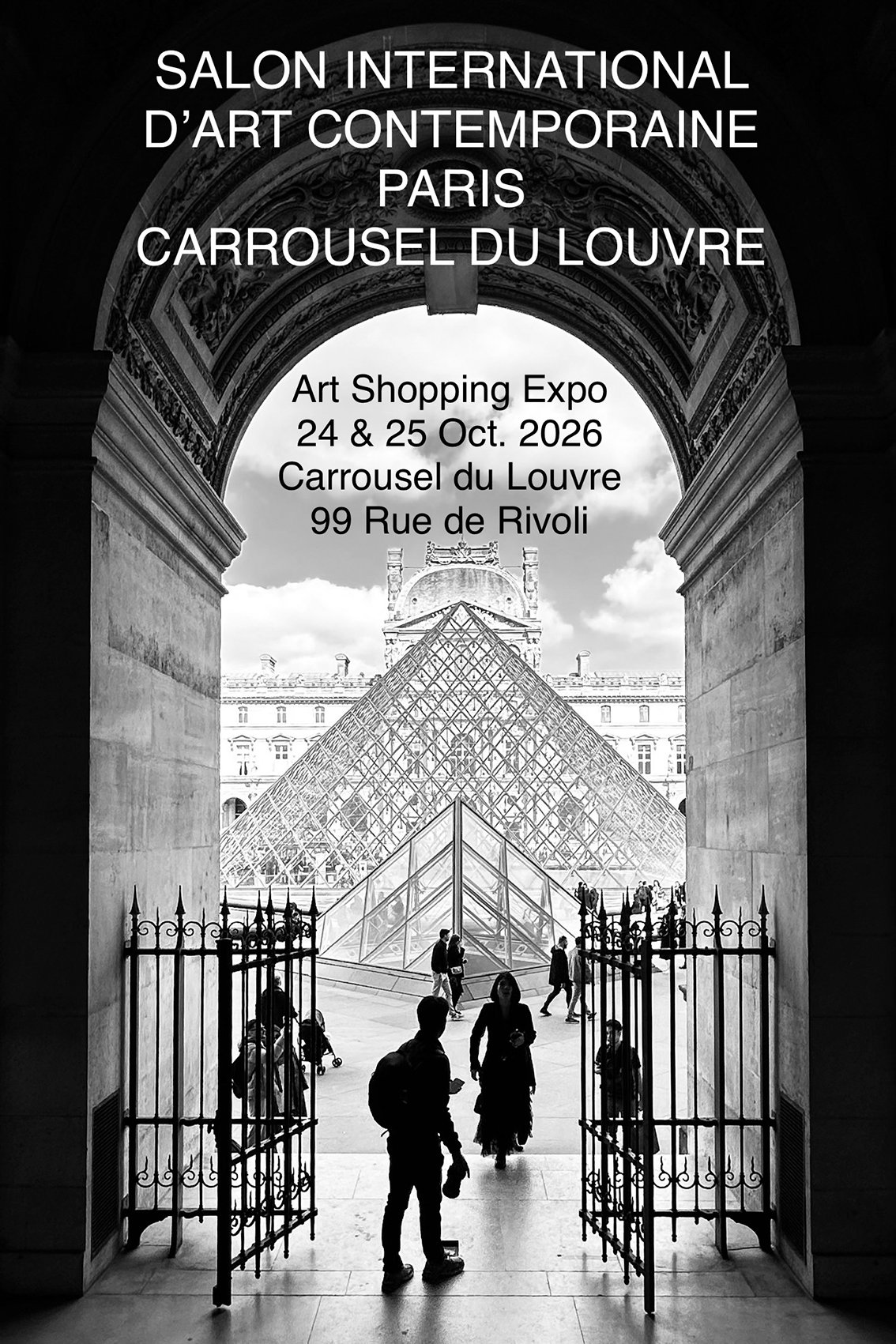
Sales exhibition (Oct 2026)
23, 24 & 25 Octobre 2026
Salon international d'art contemporain
Art Shopping Expo Carrousel du Louvre
99 Rue de Rivoli
75001 Paris -
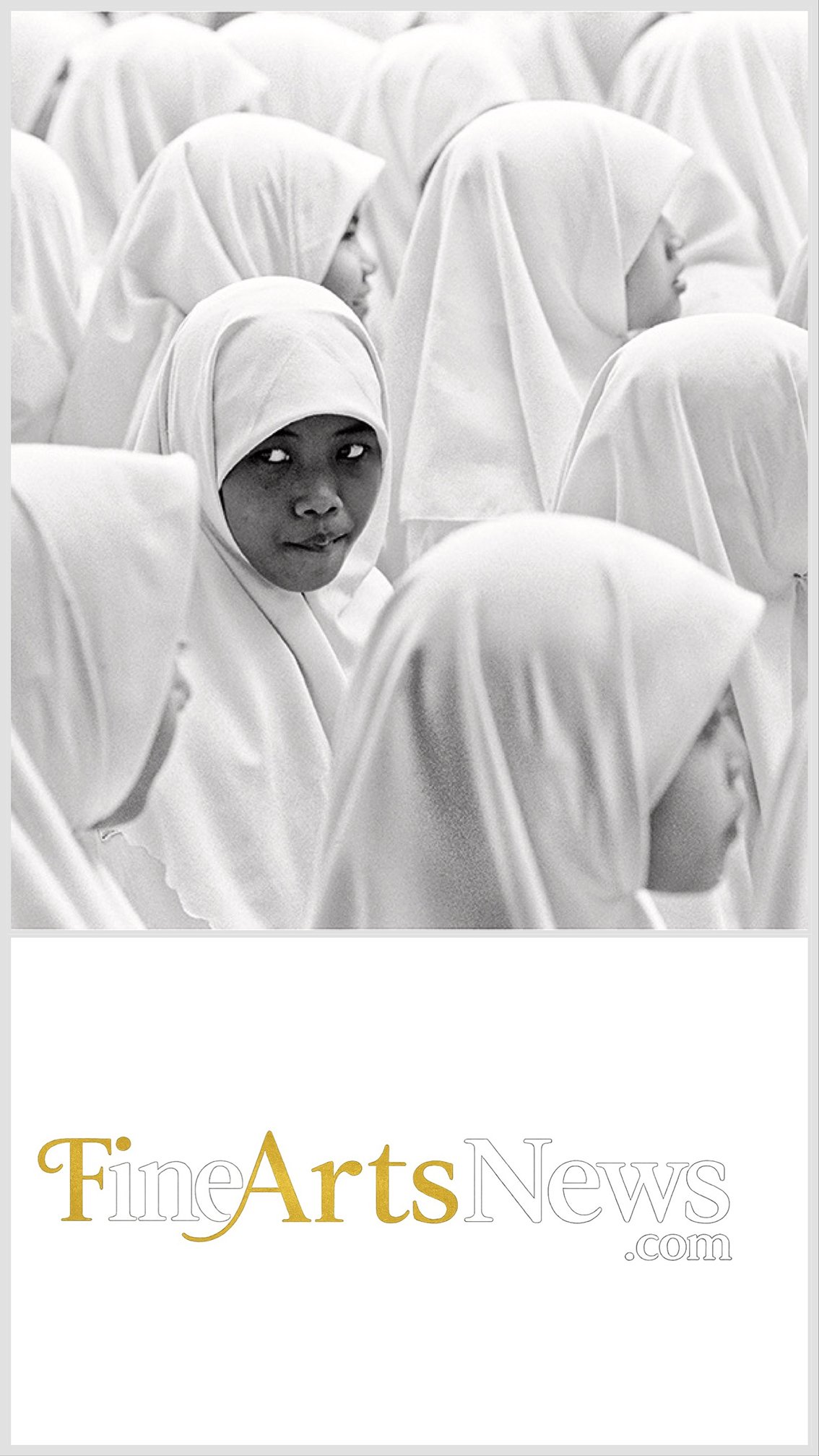
Featured on Fine Arts News
August 2026
I'm proud to announce that my work has been featured on FineArtsNews.com, a respected international publication covering fine arts, museum exhibitions, and the global art scene.
This feature article highlights my artistic journey, creative philosophy, and recent body of work.You can read the full article by clicking on the left photo.
-
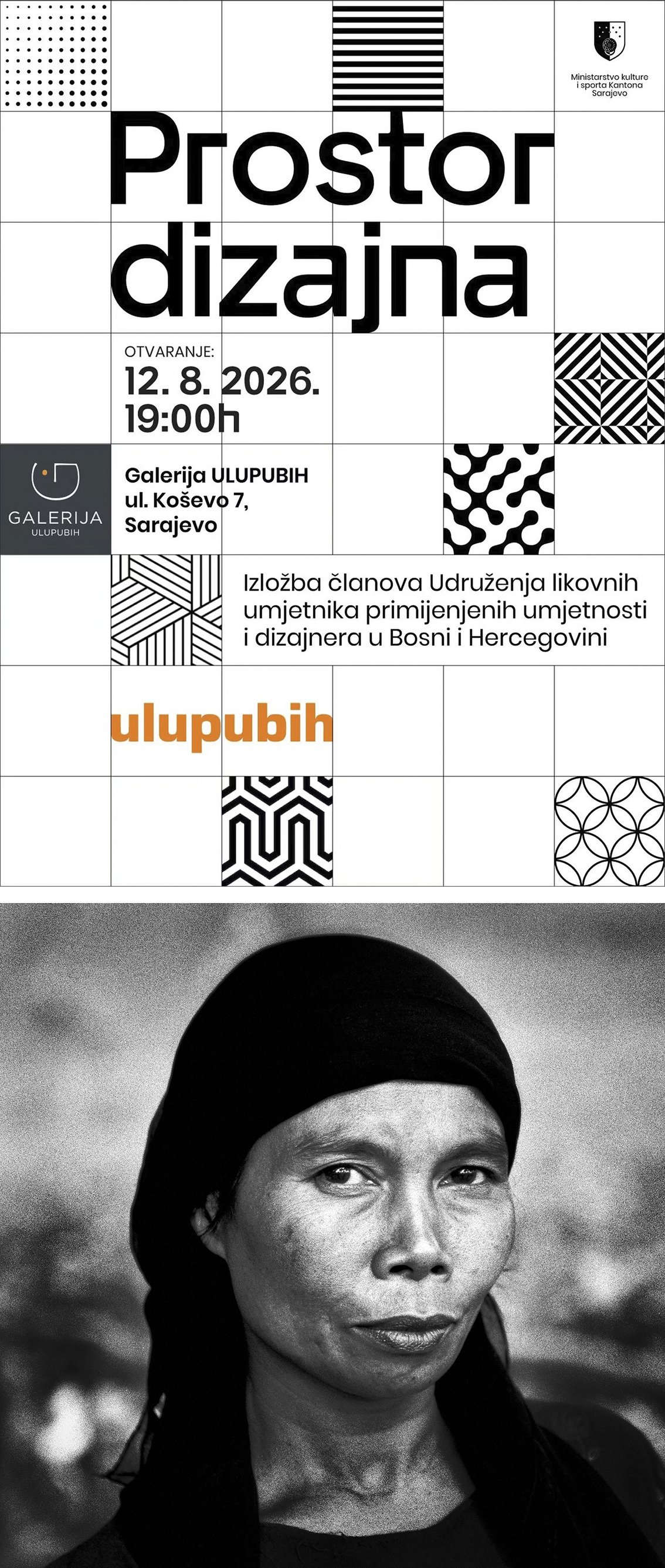
Collective exhibition Design Space, ULUPUBIH
12th of August 2026, Galerija ULUPUBIH, Sarajevo
Gallery ULUPUBiH opens its new exhibition season with DESIGN SPACE, a new exhibition programme dedicated to the production of applied arts and design. The programme focuses on presenting the creative practices of ULUPUBiH members, promoting design disciplines, and creating space for professional dialogue on the role of design in contemporary society.
The first exhibition within the programme is a group exhibition featuring more than 70 current ULUPUBiH members. In a unified exhibition format, the works presented together offer a representative cross-section of production in the fields of applied arts and design in Bosnia and Herzegovina.
The exhibition brings together authors from diverse professional backgrounds—from graphic and product design, photography, scenography and costume design, to interior design, one-of-a-kind design, new media, art theory, and other fields of applied arts—affirming the diversity and interdisciplinarity of the design scene in Bosnia and Herzegovina.
Design is an integral part of everyday life. It shapes public spaces, the objects we use, the visual communications we encounter every day, cultural content, our working and living environments, and the way we understand and experience the world around us. It is precisely for this reason that DESIGN SPACE emerges from the need to make this presence more visible and to affirm applied arts and design as fields of exceptional cultural, social, and economic significance.
The exhibition does not seek to offer a single theme or a unified aesthetic statement. On the contrary, its value lies in the plurality of professional approaches, media, and individual interests, confirming that contemporary design practice develops through difference, interdisciplinarity, and dialogue.
With the launch of DESIGN SPACE, Gallery ULUPUBiH reaffirms its role as a place for professional exchange, public presentation, and critical reflection on applied arts and design. At the same time, the project serves as a platform for the continuous presentation of the work of Association members and for promoting design as a field of public, cultural, and social significance.
The DESIGN SPACE project is realised with the support of the Ministry of Culture and Sports of Sarajevo Canton.
The exhibition features: Adis Elias Fejzić, Adnan Hajrulahović Haad, Agdal Nuhanović, Aleksandra Nina Knežević, Alisa Teletović, Alija Hafizović Haf, Almin Zrno, Amela Jesenković Obrenović, Amer Mržljak, Amila Smajović, Amir Berbić, Amna Mahić Bajrović, Amra Zulfikarpašić, Andrej Đerković, Ata Omerbašić, Benjamin Kavazović, Bernard Pavlinović, Bojana Mikulić, Čedomir Kostović, Dejan Slavuljica, Drago Handanović, Eldina Kožljak, Emina Husedžinović Ibrahimović, Emina Lagumdžija, Emir Durmišević, Ensar Hadžić, Esad Mulabegović, Goran Kukić, Goran Mulahusić, Halida Emrić, Iman della Luna Glušac, Ismar Žalica, Ismet Berbić, Jasminko Mulaomerović, Kenan Tuzi, Lejla Čehajić, Ljiljana Majkić, Ljiljana Šaković Mujan, Ljubomir Todorović, Maja Žmukić, Mia Čukle Hamulić, Mihajlo Atijas, Mila Melank, Miodrag Spasojević Štrika, Mirza Hasanefendić, Muamer Adilović, Naida Čelik, Nanda Agić, Nedžad Begović, Nermina Begović, Nermina Varešanović, Osman Arslanagić, Pavle Kovač, Rajko Poštar, Ramiz Pandur, Rebeka Abdagić, Samina Tanović, Samir Plasto, Sandro Drinovac, Sanja Džeba, Saša Vidaković, Sead Emrić, Selma Mahmutović, Sonja Radan, Stjepan Roš, Tanja Roš, Tarik Hodžić, Tarik Jesenković, Vanesa Prodanović, Velija Hasanbegović, Zoran Kanlić, and Zoran Lešić.
The exhibition opening will take place on Wednesday, 12 August 2026, at 7:00 PM at Gallery ULUPUBiH, Koševo 7, Sarajevo.
We invite you to join us and support the opening of the new exhibition season at Gallery ULUPUBiH.Text taken from www.ULUPUBIH.ba
-

Photo for the book cover
"Clinical image gallery", 2026
-
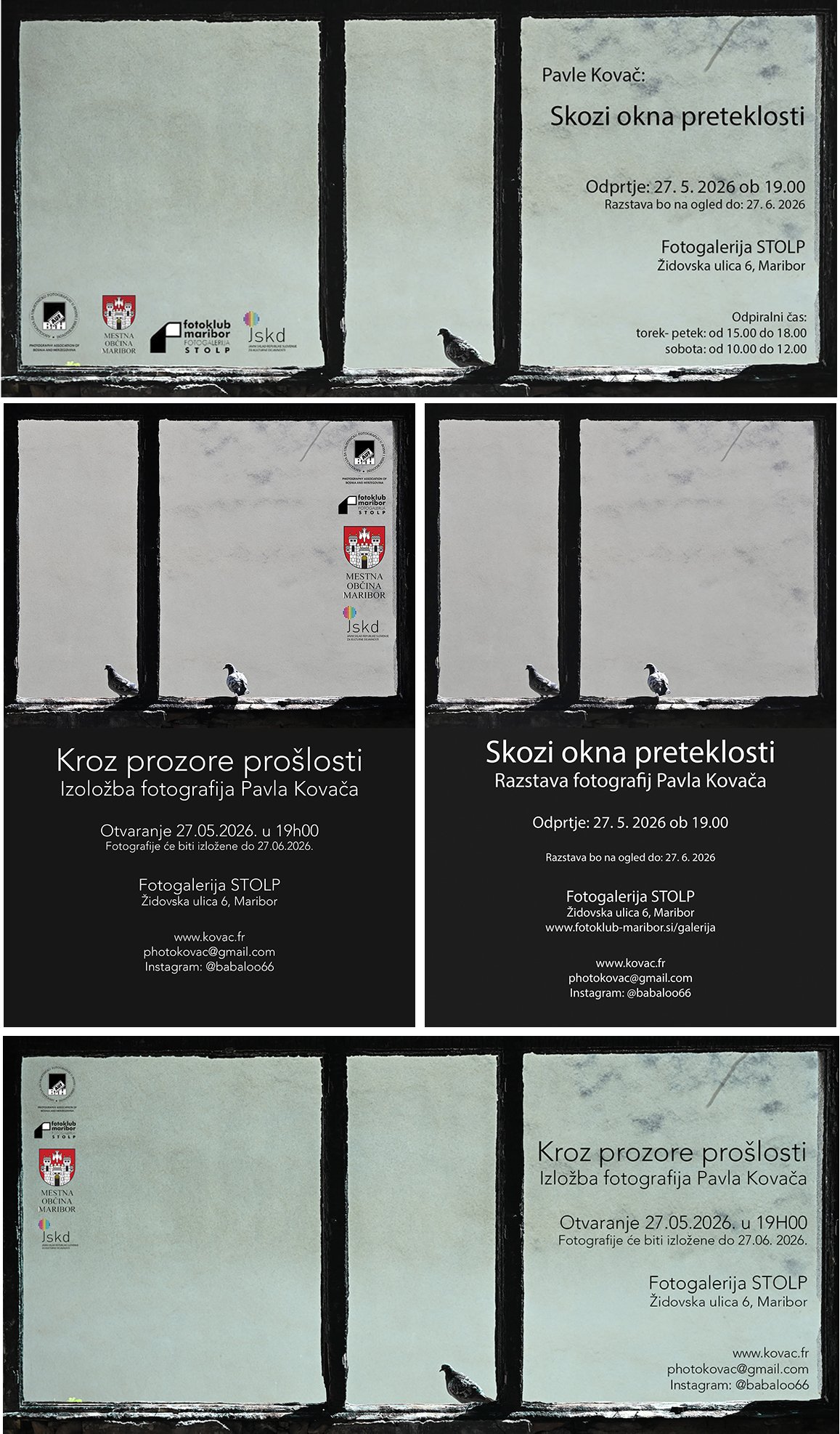
Solo exhibition Through the Windows of the Past (May / June 2026)
27th May to 27th June 2026, Fotogalerija Stolp, Maribor
Windows of Perception
What are the first images a person remembers?
It is often impossible to answer that question, because the act of seeing is simply inseparable from interpretation. The image that the author of this text believes to be the first he ever saw is a view from a window, in a house that no longer exists, in a neighborhood that has withstood the tooth of time for centuries, where it is visible to the naked eye that even the walls, despite new construction, breathe with difficulty—yet still breathe, to continue the metaphor—through windows. Photography, in a sense, can also serve as the fuel of memory, so what we consider our own memory is actually a kind of correction, a retouching of childhood photographs. A view from the window into the courtyard, a small yard in Mostar, cobblestones on which the sunlight falls at different angles—and an image.Since we are not here for theoretical considerations about the unreliability of memory, but for photography, let us begin at the beginning. The first true photograph is generally attributed to the work of the French inventor Nicéphore Niépce, who made the first photograph in 1822, though it was accidentally destroyed. The first photograph considered successful and permanent was also his work, created in Saint-Loup-de-Varennes, in Burgundy, eastern France, and is called *View from the Window at Le Gras*. The technique was innovative for its time: a *camera obscura* focused on a 20 x 25 copper plate coated with a petroleum derivative, bitumen. This marks the beginning of a medium and of an entire world seen by the human eye.
From a window, then.
Divided into thematic units, these photographs tell us above all about the one who took them: Pavle Kovač, traveling the world and working as a builder, engineer, and researcher, first and foremost learned how to look. In truth, these things can never be precisely separated: to what extent did the Sarajevo schoolboy who first picked up a camera know how to look through the viewfinder and lens? But it is better that way. The artist improves over time, and time is the only reliable companion of art.
However deceptive it may be. As deceptive as the time in which we live.
The flow of time in a frozen moment—that might perhaps be one definition of photography, but even that is not the most important thing. In these works, the window primarily suggests a frame. Since the word *frame* has taken root—indeed, we might say become embedded in everyday communication—it is not wrong to view these windows as picture frames in which a certain flow of time unfolds.
Or remains still within them.
That, again, might be one definition of art, but once more we find ourselves in that invisible circle in which its first task is not to define, but to reveal or to show.
In the case of the window, it does both. Let us now play with another technique, one often called a book within a book in literature, but which here can comfortably be called a frame within a frame, where what the photographer places in the frame is one thing, what is in the window another, and the third thing we only sense, because behind the glass—which in these photographs is often broken—there is either a black hole or some entirely new world.
Or, as always, and especially today, an uncertain future?
As Baudelaire says, “what can be seen in the sunlight is always less interesting than what happens behind the glass. In that black or luminous hole, life lives, life dreams, life suffers”—in fact, an assumption. Very probably a correct one, but what grips us in these photographs, especially in every “good” work of art, is the feeling that we ourselves are the subject of what is seen in them. Simply or not, if the world or some fragment of it is perceived in different ways, then the reception of his work will also differ depending on what we see in it. Nothing new, you may say, but different—certainly. Looking at these photographs, former and future worlds open before us, present ones remain, and past ones arrive in a way that, at least from this author, we have not yet seen. As he assembles his “pieces”—some of which, of course, are missing—he enters into the interpretation of the world, where the photographer is no longer merely someone who records, who freezes a particle of reality.
Rather, he gives it—or them, if you prefer—a new dimension.
In that discourse, the photograph of a door of which one part still stands before us while the other has been destroyed by time—or perhaps someone simply needed a plank, so they “deconstructed” it, as people like to say today—is a kind of manifesto of parallel worlds. Behind those doors, or in front of them, there might have been—or perhaps still is—anxiety, insight, and the wish that they remain as they are, both closed and open.
Or the wish that they open toward a world that always offers both new traps and new qualities. A house whose window reveals the sky from the outside is at once both metaphor and former world. It is an abandoned world, in a sense a demoted one. A world that might once have belonged to someone, only to become, like so many before it, no one’s. From that perspective we might say that most of these photographs—or this is just one interpretation—were taken in no man’s land, although all of them certainly possess spatial and temporal specificity. They seem to ask whether we are all children of no one’s world, thrown into it without our responsibility and somehow abandoned to leave our mark within it.
Or to disappear from it?
These images provoke many associations in the viewer. They remind us, too, that it is no coincidence that the most popular program—the one that would permanently mark our era—found both its content and its name precisely in windows: *Windows*.
And indeed, there are few things that offer so many possibilities of seeing. Perhaps, from the inside, we all see only as much as the window actually “allows” us to.
For the window is at once an opening onto the world and a refuge from it. A boundary between the inner and outer worlds. There is probably no object so simple—in essence, a part of a wall—to which context and surroundings, that is, (narrative) space and structure, have assigned so many different roles. From shop window to portal, lookout post, slit, entire wall, or one of its fragments, the window carries the impulse of experiencing the world, yet from that same world it also brings back the reflection of that experience: above all light, from which, after all, the civilization in which we endure was born.
Or is even that questionable now, given the current polarization of the world?
It is as if, before our eyes, piece by piece, the world we knew is slowly disappearing. And as if, in encountering these photographs, we are confronting what awaits us and what, in fact, may come.
Which window will open? Which will fall? Which one of us is the bird standing in its right corner, waiting to fly away from there, or simply to step beyond the imagined boundary set by the pane?
From abandoned schools and buildings, to workshops, to double views—the most interesting being those of different shapes—before us is a work of detection and introspection, recognizable by its signature, that perhaps most important element of (spiritual) production, in a medium that demands both technical knowledge and skill.
That is why one should look (through) these windows.
Every sign we see through them is a new frame for some new content. It is not without reason that people say everything in the world is a matter of perspective.
A perspective that can always surprise us. When reality does not match our experience of it, or when we see it clearly and plainly.
Or when we simply look at it through a window. As in these photographs.
Ahmed Burić
-
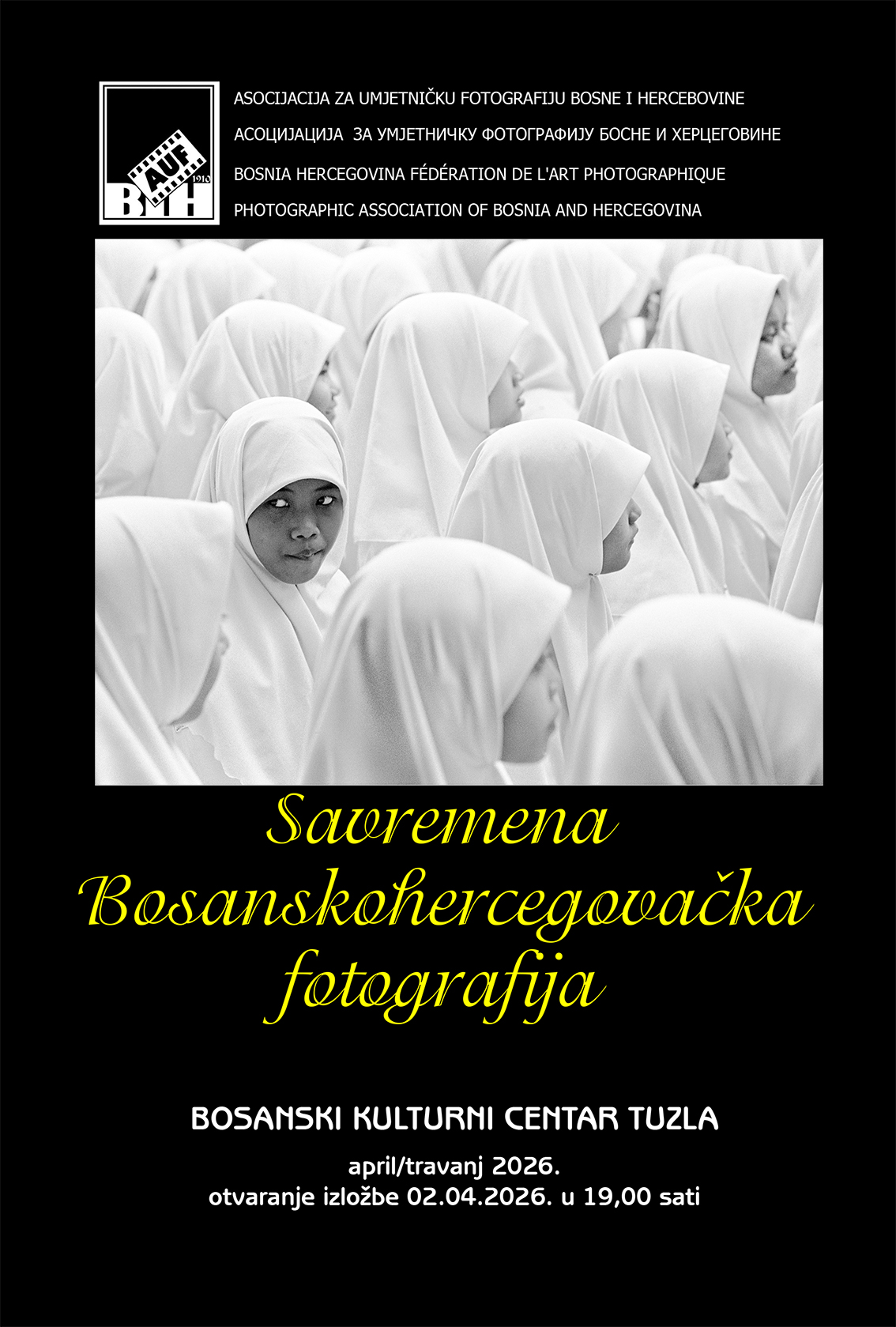
Collective exhibition Contemporary Photography in Bosnia and Herzegovina, AUFBIH
4th to 16th of April 2026, Bosnian Cultural Center, Tuzla
AUFBiH was established in 1910 under the name Association of Photographers of Bosnia and Herzegovina, and since 1947 it has operated as the Photo-Cinema Union of BiH. From 1964, it has functioned independently as the Photo Association of BiH, and since 2003, following re-registration, it has operated under the name Association for Artistic Photography in BiH.
The exhibition “Contemporary Bosnian-Herzegovinian Photography” will take place at the Bosnian Cultural Center in Tuzla. The exhibition is organized to mark the 115th anniversary of the Association for Artistic Photography in Bosnia and Herzegovina (AUFBiH).
This exhibition is part of a series of activities celebrating this significant milestone in the organized photography scene in Bosnia and Herzegovina. It will present a selection of works from contemporary Bosnian-Herzegovinian photographic production created over the past five years.
The history of organized photography in Bosnia and Herzegovina dates back to 1910, when the Association of Photographers of Bosnia and Herzegovina was founded. Since 1947, it has operated as the Photo-Cinema Union of BiH, from 1964 as the Photo Association of BiH, and since 2003 it has carried the name Association for Artistic Photography in BiH.
The exhibition selection was made by Dragan Prole, a master of photography at AUFBiH and holder of the international title EFIAP/d3, who selected 35 photographs by as many authors for this occasion. The works were chosen from the collection of submissions received for the annual FotoBiH exhibitions.
The exhibition organizing committee consists of Ozren Božanović, Dragan Prole, Milorad Kašćelan, Zenir Šuko, and Radoje Elez, while Ahmet Hukić and Samir Mujakić are responsible for the exhibition setup. The photograph on the catalog cover is by Dejan Selaković, and the catalog was edited by Ozren Božanović.
The exhibition represents a unique opportunity for all photography enthusiasts to become acquainted with contemporary trends and achievements in the Bosnian-Herzegovinian photography scene.
The exhibition will remain on display until April 16.Text is taken from www.bkctuzla.ba
-
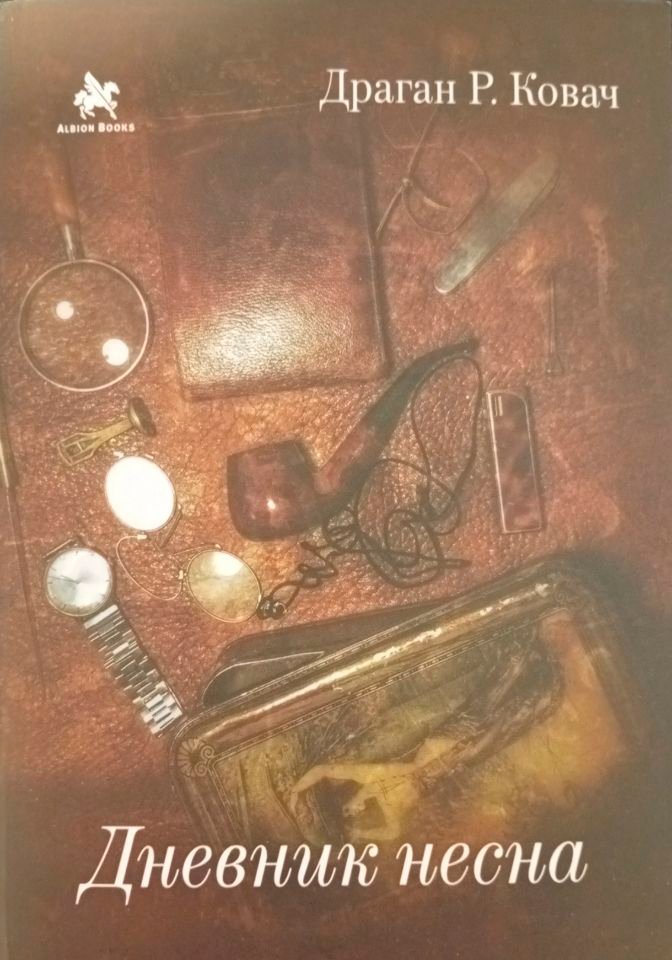
Photo for the book cover
"Diary of insomnia", 2024
-
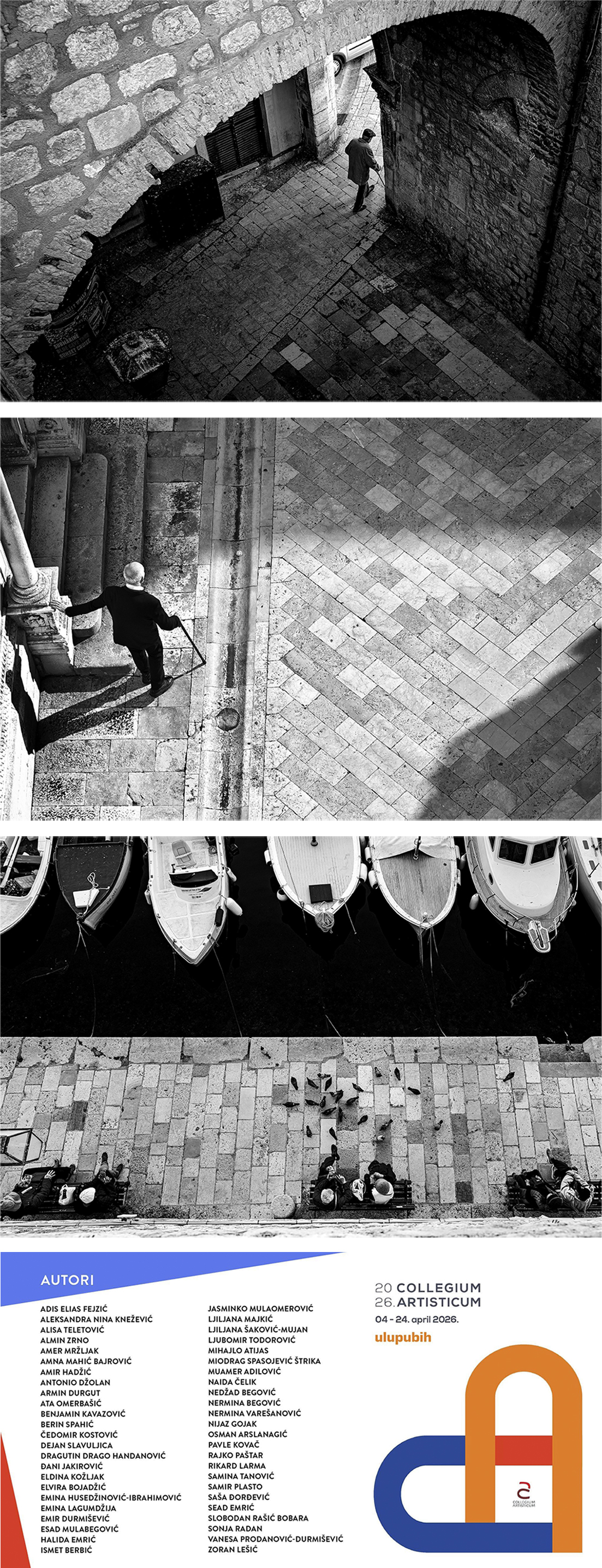
Collective exhibition 6th of April, ULUPUBIH
4th to 24th April 2026, Collegium Artisticum, Sarajevo
Dear Audience,
In a packed Collegium artisticum gallery, the annual juried selection exhibition of members of the Association of Architects of Bosnia and Herzegovina, the Association of Visual Artists of Applied Arts and Designers of Bosnia and Herzegovina, and the Association of Visual Artists of Bosnia and Herzegovina was opened, on the occasion of marking 6 April, the Day of the City of Sarajevo.
We extend our thanks to the esteemed Mayor, Samir Avdić, who honored the event with his presence and ceremonially opened the exhibition with his address.
This year’s exhibition presents more than two hundred works by Bosnian-Herzegovinian artists, designers, and architects, and at the opening, awards, commendations, and recognitions were presented for the best achievements, according to the decisions of the associations’ expert juries.
The staff most responsible for the technical realization of the exhibition and the installation of the works are gallery employees Jasmin Osmanković and Minel Klis.
On behalf of the gallery, we also thank everyone who contributed to the realization and installation of the exhibition, including Damir Šabić (member of the ULUuBiH Artistic Council), Mehmed Jusić (technical support), coordinators Nanda Agić, Marija Pravdić, and Kasja Jerlagić, as well as all the authors who, together with curator Sanela Nuhanović and the gallery staff, participated in the appropriate installation of their works.Below we share with you the foreword signed by Elvedin Poturak, Director of the Collegium Artisticum Public Institution:
The Annual Juried Selection Exhibition, traditionally held since 1975 at the Collegium artisticum gallery on the occasion of 6 April, the Day of the City of Sarajevo, once again this year brings together three professional associations—visual artists, applied artists, and architects—in a unique space of encounter, dialogue, and contemporary expression. This exhibition is not only an overview of annual production, but also a relevant cultural event that testifies to the continuity of artistic creation and its deep rootedness in the social context.
In a time marked by global crises, political tensions, and accelerated technological change, artistic creation does not remain on the sidelines. On the contrary, it is taking shape as a space for reflection and resistance, but also for hope. Contemporary artists act within a complex system of influences—personal, local, and global changes—where questions of identity, belonging, ecology, migration, and digital reality intertwine. Their works often transcend an aesthetic framework and enter the sphere of critical reflection on the world. The ‘Sixth of April Exhibition’ gains its full significance precisely in this context. It enables insight into the diversity of contemporary artistic practices, while at the same time providing a platform for the visibility and affirmation of authors.
Through their joint presentation, artists and architects affirm the importance of professional association and the exchange of ideas, further strengthening the cultural scene. The Collegium artisticum gallery plays an irreplaceable role in that process. As a meeting point between art and the public, it functions not only as an exhibition venue, but as an active participant in shaping cultural dialogue. For artists and designers, exhibiting in this space is a confirmation of professional work and an opportunity to communicate with the public and the professional community. For architects, whose work is primarily tied to space and its function, the gallery becomes a place of reinterpretation—a context in which ideas move from the everyday into artistic discourse.
Ultimately, this collective exhibition remains a symbol of continuity, togetherness, and the enduring need for art as one of the key ways of understanding the world. It reminds us that, despite the challenges of the contemporary moment, creativity does not cease—it transforms, questions, and continues to speak a universal language that transcends borders and time. Its importance goes beyond the bounds of the art scene itself and is reflected in the broader social context.
For the City of Sarajevo, it represents one of the key cultural events that shapes its identity, strengthens cultural life, and confirms its role as a space of encounter and contemporary artistic currents. The exhibition contributes to the city’s visibility, attracts a diverse audience, and reinforces its status as an important regional cultural center.
At the level of the state, the importance of this exhibition is reflected in the affirmation of cultural potential and creative capital. Through events like this, domestic artistic production is promoted, the development of cultural policies is encouraged, and the role of culture as a foundation of social progress is confirmed. The ‘Sixth of April Exhibition’ thus functions as a space of cultural representation and a platform that connects artists, institutions, and the public, contributing to the preservation and strengthening of cultural identity.Elvedin Poturak
Director, Collegium Artisticum GalleryText taken from Collegium Artisticum Facebook profile
-
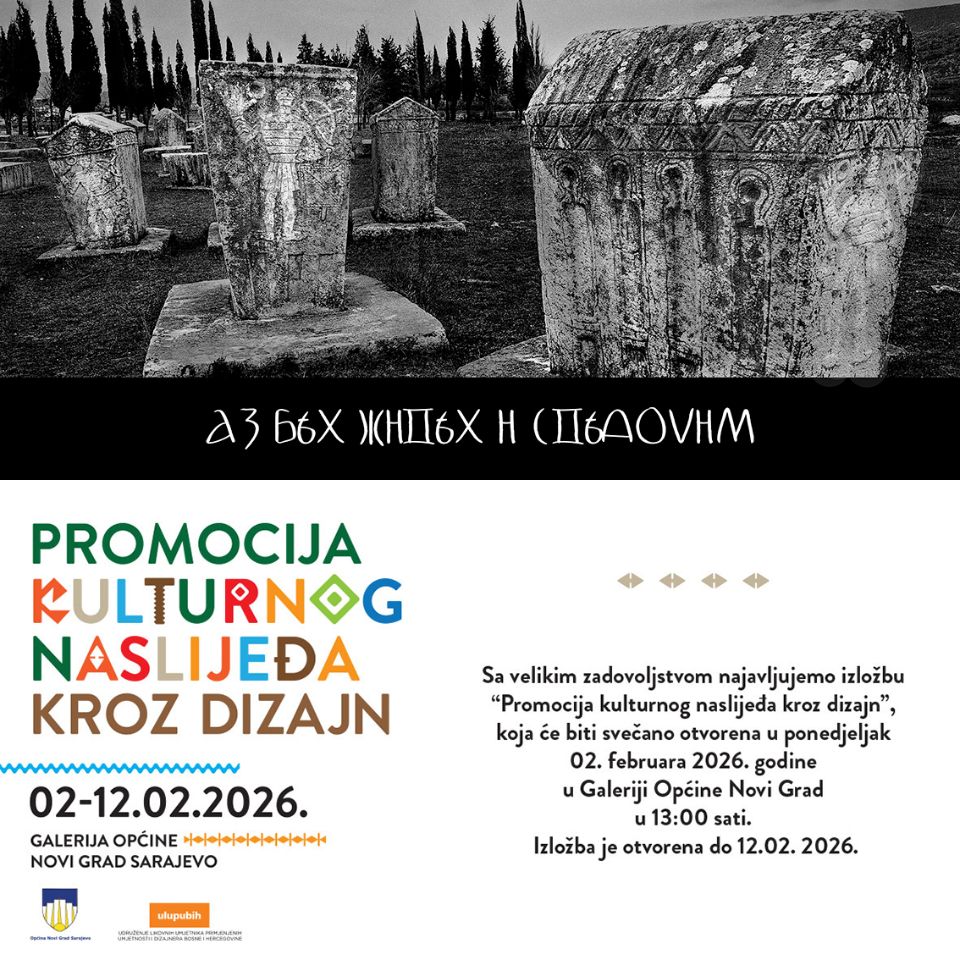
Collective exhibition Promotion of cultural heritage through design, ULUPUBIH
2nd to 12th of February 2026 in Galerija Općine Novi Grad, Sarajevo
Reinterpretations – Promoting Cultural Heritage Through Design
The exhibition “Promoting Cultural Heritage Through Design” is grounded in a contemporary understanding of cultural heritage as a dynamic, multilayered, and interpretatively open category, whose meaning does not arise solely from form or ornamentation, but from the context, processes, and relationships it establishes within the contemporary cultural sphere. In this sense, design is not viewed merely as a carrier of aesthetic values, but as an active medium of cultural interpretation, capable of articulating identity, memory, and continuity through a contemporary visual and material language.
The exhibition encompasses a wide range of media — from graphic and industrial design, illustration, and typography, to textiles, jewelry, and spatial interventions — highlighting the diversity of contemporary approaches to working with both the material and immaterial aspects of cultural heritage. At the same time, the exhibition reflects the problems and challenges of contemporary design in Bosnia and Herzegovina; it suggests the pressure and complexity of the social, cultural, and institutional circumstances that shape the creative field, without diminishing or embellishing them. It opens them up to reinterpretation — for us and for those who come after us.
The thematic units are conceived as interconnected narratives that explore motifs, processes, materiality, and the spatial manifestations of heritage, as well as its visual and communicative potential in a contemporary context. Through these units, the continuity of craft knowledge is emphasized, along with the importance of materials as carriers of cultural memory, and the capacity of design to translate traditional elements into new, functional, and conceptually relevant forms.
Ultimately, the exhibition affirms design as a relevant actor within contemporary cultural and social processes, positioning it as a space of encounter between past and present. The presented works do not offer a nostalgic view of tradition, but rather regard it as a resource for reflecting on contemporary identity and future possibilities of cultural expression. Through the dialogue of different authorial approaches, the exhibition opens space for a new reading of cultural heritage. Following this logic, it also raises the question of our (collective and personal) relationship to heritage: how do we understand it, translate it, and live it in the present moment?Elma Fišić, art historian and curator of the exhibition
“Three Witnesses” – The medieval tombstones of Bosnia and the neighboring regions are decorated with reliefs and inscriptions written in Bosančica. The stones called Stećci bear witness to the life and identity of the people of that time, while Bosančica represents a bridge between medieval culture and literacy.
The work “Three Witnesses” unites these two key elements of medieval identity: the stećak and Bosančica, stone and script, the photograph by Pavle Kovač and the Bosančica typography by Goran Čuljak. The combination of analog photography and a modernly designed Bosančica font, used for the epitaph “I was, I lived, and I bear witness,” simply connects history with modern technical (re)construction and, in doing so, seeks to contribute to the preservation of our cultural heritage.Pavle Kovač, author
-
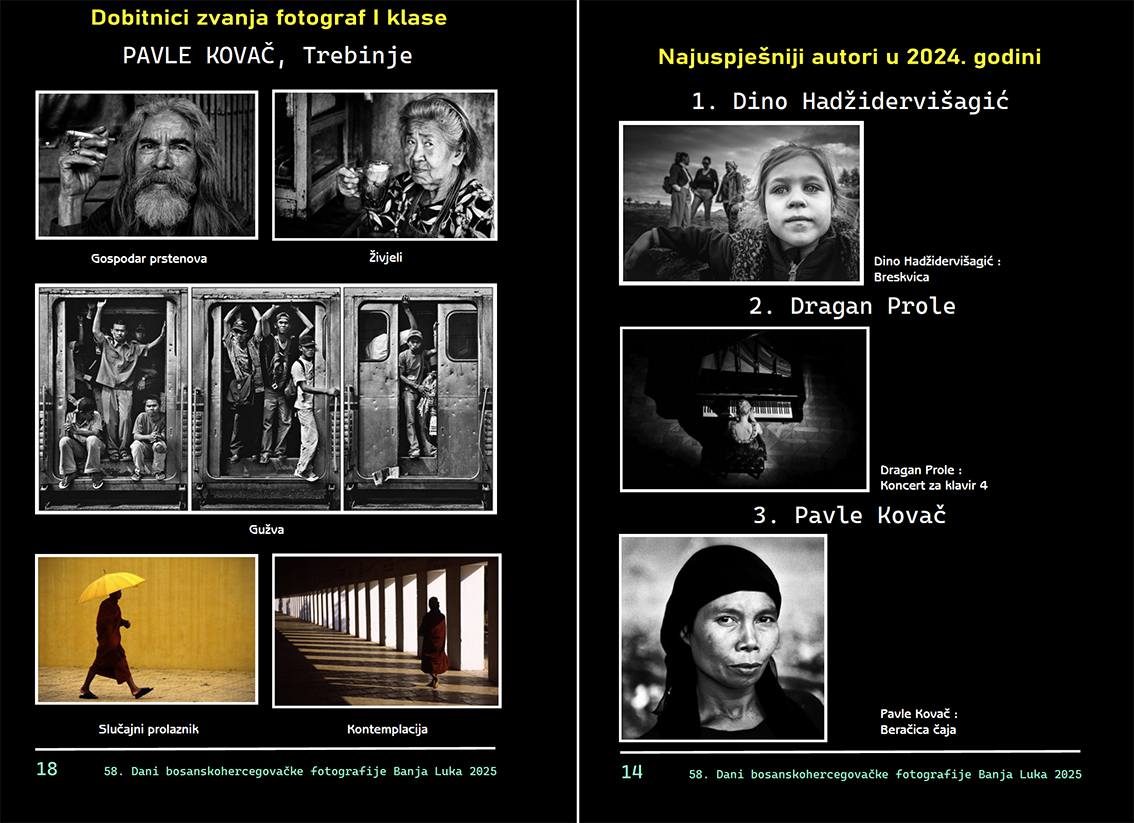
Recognition (Dec 2025 / Jan 2026)
58th Days of BiH photography, Banja Luka, Dec 2025 / Jan 2026
Photographic Association of Bosnia and Herzegovina (AUFBIH) in 58th edition of the exhibition Fotography in Bosnia and Herzegovina awarded the title First Class Photographer of Photographic Association of Bosnia and Herzegovina and 3rd place in Selection of the most successful Authors in 2024
-
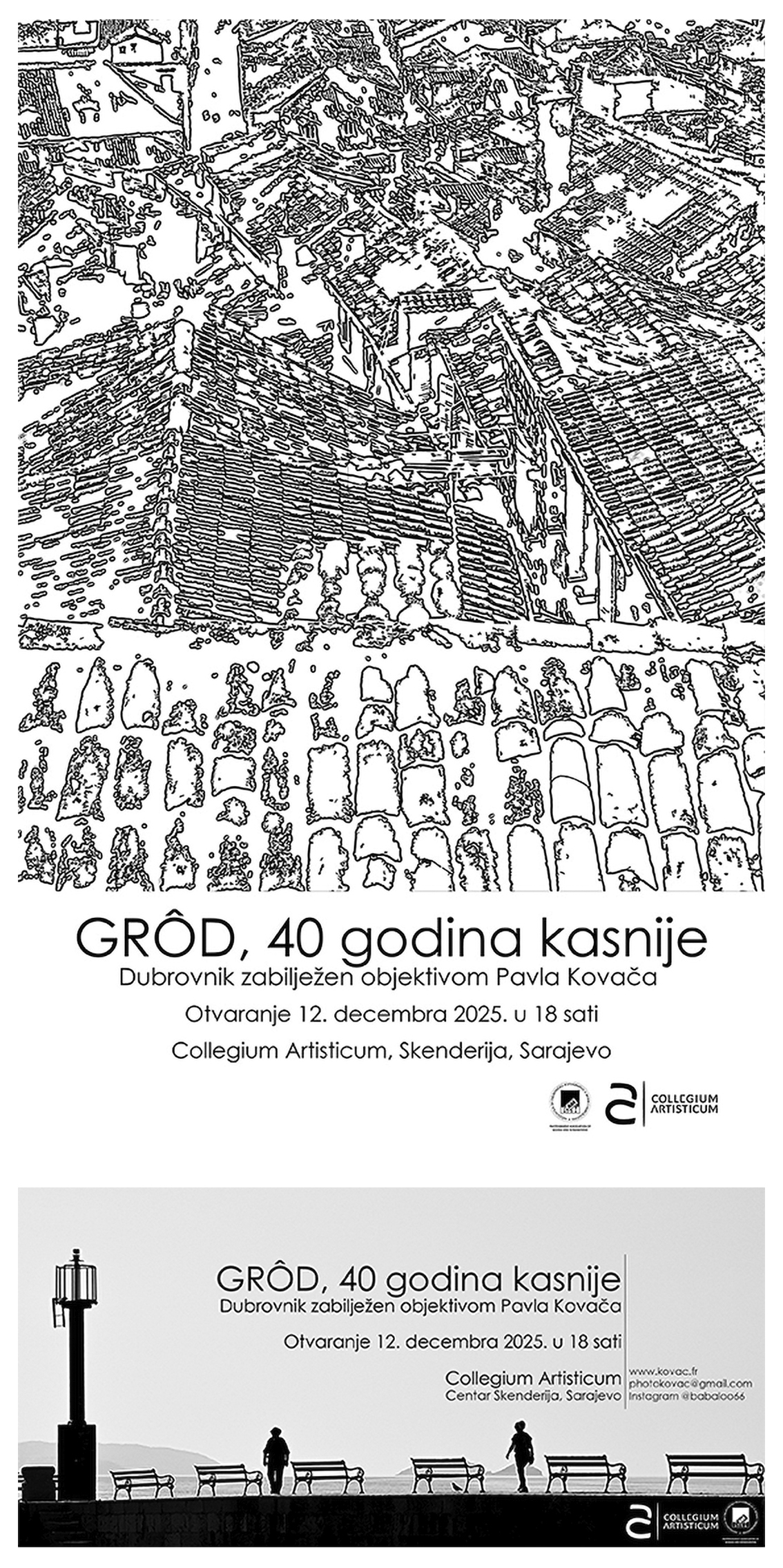
Solo exhibition Dubrovnik 40 years later (Dec 2025)
12th to 23rd od December 2025, Collegium Artisticum, Sarajevo
ABOUT OUR CITY
One of humanity’s most enduring obsessions is the passage of time. Nothing unsettles us quite like the awareness of our own impermanence and transience. How long will we last? When will we end? And is it really true that so little will remain after us? Regardless of our sighs, time continues to flow relentlessly, while we stand thoughtfully on the shore, waiting for the current to carry us away. And yet, throughout all the time in the world, we stubbornly attempt to compress it into our human frameworks. When the natural cannot fit into molds made of such perishable human material, we marvel at the disproportion — and keep marveling. For example, the fact that we cannot see with the naked eye that stone, too, ages does not mean that it does not happen. One day, it too will return to dust. Man and stone — it sounds somewhat unusual, yet appealing, like a kind of counterpoint on transience.
Dubrovnik, and especially its Old Town, are examples of such fantastic endurance in stone, something that has always attracted and bewildered people. How old it is — patinated and polished — yet at the same time mysteriously young in its radiance. So long-lived — enough to make one perish of human envy. Dubrovnik. As if it were more than a city, more than its buildings and the layers of history that, like mythical foundations, have held it upright for centuries. But of course, the city’s name is a linguistic illusion, for it would be a shell without content. It is precisely such special substance that Nikola Kovač writes about in his concise travelogue. One immediately notices that the writer is captivated by Dubrovnik’s Mediterranean character — both because of its de facto belonging to a great civilizational circle and as proof of his own rootedness. Let it be clear at once: Nikola writes about a place that we — at least those of us from the same geographical, Herzegovinian stock — also feel to be our city. Just as the Mediterranean cannot be halted by borders and barriers, intimate belonging is not subject to customs control.
At the thematic center of the travelogue lies the well-known and here well-described impression of temporal and historical “confusion” that overwhelms us upon arriving in Dubrovnik. It is as if we are witnessing a collision between the scenery of immediate reality on one side and long historical duration on the other, so that the glorious past often seems more vivid than the present. Sparks fly from this collision, and perhaps that is why this special city flickers in our memory, and why we return to it. Nabokov says — to paraphrase — that drama resides in language; it dictates the rhythm and meaning of a manuscript. In this case, in connection with such a subtext, Professor and gentleman Nikola Kovač not only describes his broader homeland, but passionately reflects himself within it. This refers, of course, to spiritual nobility and refinement — the kind that can only be earned through character and deeds. Such qualities have always been the rarest, and thus, like precious metal, especially valued. Not everywhere, and not by everyone — just as Dubrovnik is not for everyone. And those times in which such refinement is pushed aside by different values perhaps reveal the most about themselves.
A particular reverence for the city’s beauty also radiates from Nikola’s travelogue, weaving between the words and wrapping around them like ivy. And in that ivy-like way, it clings and adheres to the stone walls, remaining permanently as a record inseparable from its subject. Perhaps it is best that none of these moral weights are explicitly named, but are instead, through literary skill, transformed into images of thought and their reflections. As we read them, Kovač’s words are wondrously, epigraphically inscribed into our memory:
“Archaeology is not only a ‘religion of atheists,’ but also a means of establishing the truth about the strength of faith and the durability of the creations of the human mind and hand. Senseless theories about origin and ethnogenesis are here replaced by fascination with the achievements of generations who respected laws and symbols whose principles and beauty we accept as the attainments of modern humanism.”
And then Pavle, Nikola’s son, comes forth and reveals that he, too, has for years been recording all this with his camera, in his opus titled “The City, 40 Years Later.” Not by chance, need it even be said. It is a peculiar feeling to pass through these photographs; one has the impression they belong to some collective album of ours. In truth, they seem “familiar from before” because, like true art, they are above all grounded in human experience. Another proof that nothing in the creative process can truly be invented — it can only be drawn from the archives of memory, which are often older than our individual lives. Looking at these photographs several times, it seemed to me — and perhaps this is a bit of mischievous fancy — as though Henri Cartier-Bresson or André Kertész had personally resurrected in Dubrovnik to click the shutter a few times. And so, for forty years.
In his photographic homage, Pavle Kovač presents, among other things, frames of the Old Town from 1984 and then the very same scenes photographed again in 2024, forty years later. And what is the first impression when one sees this comparative display? Ah, man! Dubrovnik has not aged at all — on the contrary, it is even more beautiful. And of course we, as mere mortals, are jealous of that; forty years is immense for a human being, while some cities boast for centuries. The fact that the light in these photographs is, in a particular way, both omnipresent and subtle has to do with the author’s motivation, his secret, which he reveals to us only partially. As it should be — because then each of us completes it for ourselves.
Just as Nikola’s travelogue, as already said, cannot be separated from Dubrovnik, so Pavle’s “City” appears as an integral part of a larger whole. And together, in an intimate embrace, they speak of love, respect, nostalgia, and honor. And perhaps this last is also the first in that sequence.Namik Kabil, writer and film director
-
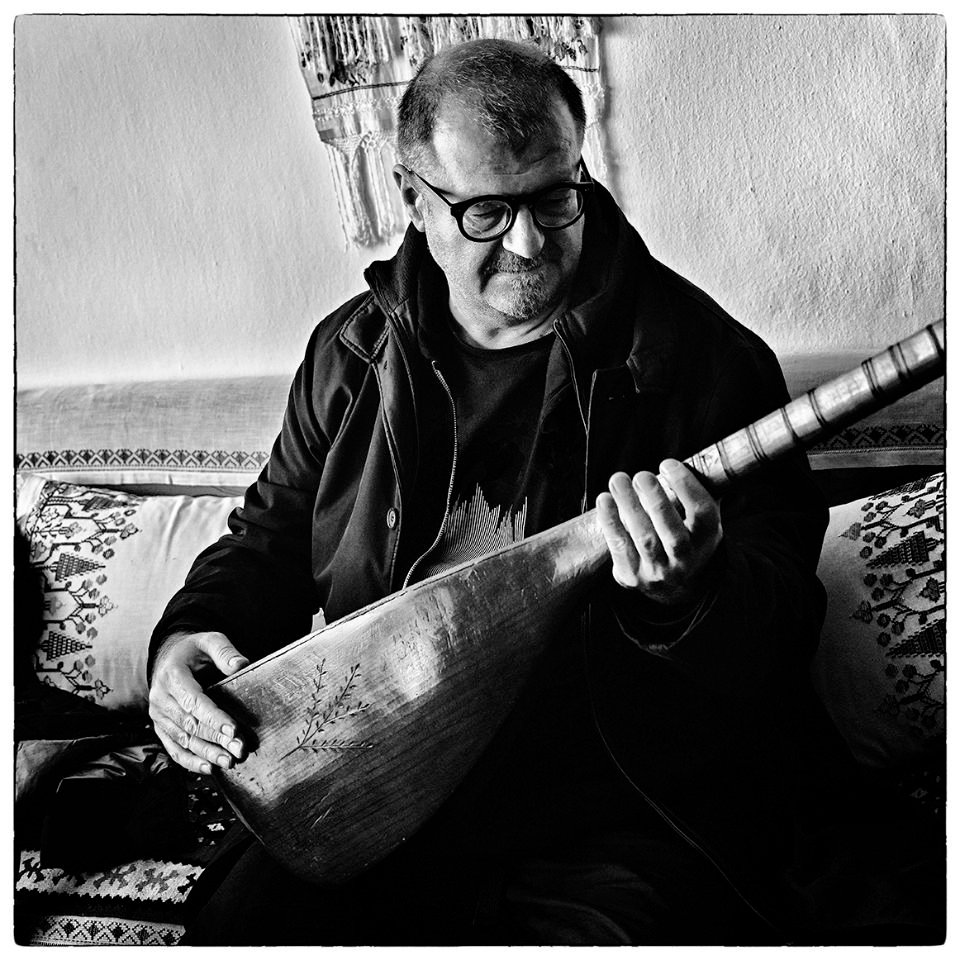
Editorial portrait
September 2025
Editorial photo covering different articles about Buric Ahmed's concert and work published on different websites (Vecernji.hr, Festival svjetske knjizevnosti, Ravno do dna, Glazba.hr, Lisinski.hr, Cankarjev dom).
-
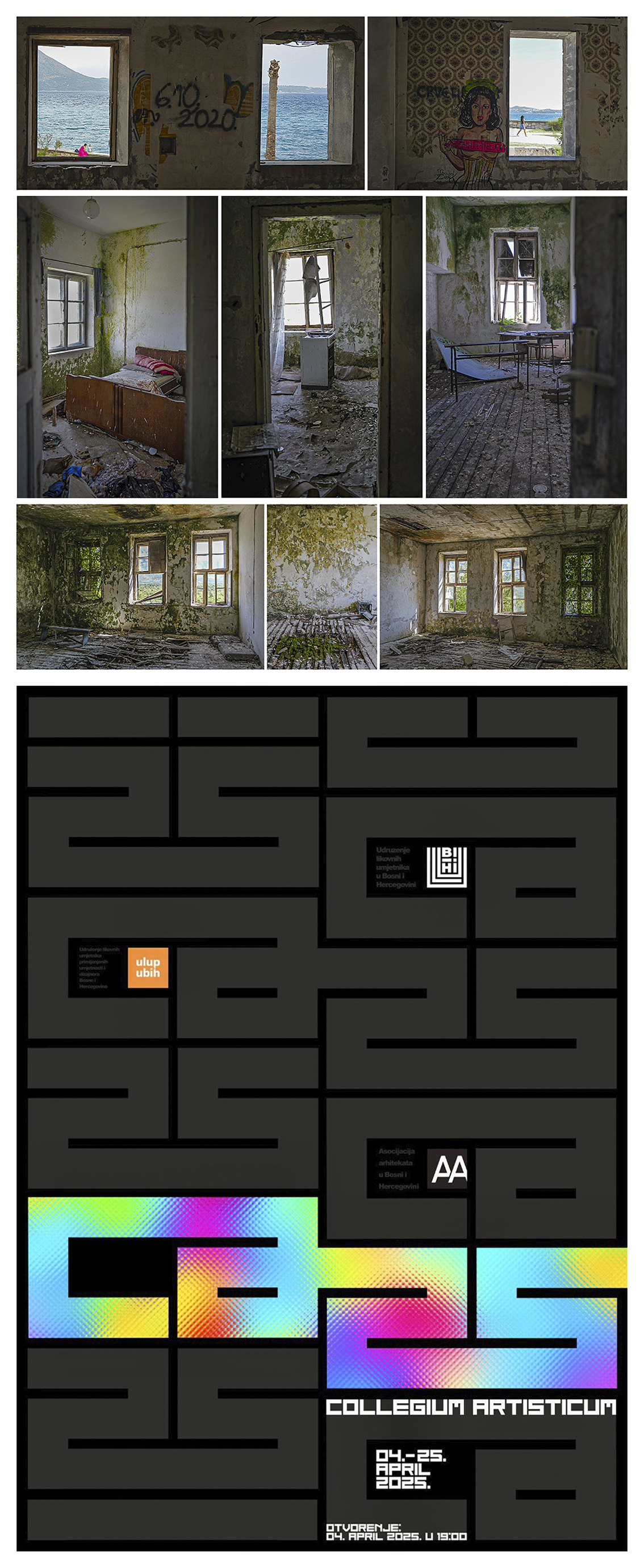
Collective exhibition 6th of April, ULUPUBIH
4th to 25th of April 2025, Collegium Artisticum, Sarajevo
On the occasion of 6th April, the Day of the City of Sarajevo, the traditional annual exhibition “Collegium Artisticum 2025” will open tonight (4th of April 2025) at 7:00 PM at the iconic city gallery “Collegium Artisticum.”
This is a collective exhibition featuring members of three professional associations: Association of Fine Artists of Bosnia and Herzegovina (ULUBIH), Association of Applied Artists and Designers of Bosnia and Herzegovina (ULUPUBIH) and Association of Architects of Bosnia and Herzegovina (AABH).
During the exhibition opening, annual awards and recognitions from the three professional associations will also be presented.
The tradition of this 6th April gathering of artists dates back to 1975, when the exhibition “Collegium Artisticum 1975” inaugurated the current exhibition space of the gallery bearing the same name.
The entire event holds undeniable prestige and is of special significance to the City. Since its inception, it has fostered unity and preserved the memory of the progressive intellectual and artistic movement that marked the cultural life of our community in the late 1930s.
At this year’s exhibition, the 46th edition, more than two hundred works by Bosnian and Herzegovinian artists, designers, and architects will be presented. At the opening ceremony, awards and recognitions for the best achievements will be presented in accordance with the decisions of the associations’ expert juries.
The public will have the opportunity to gain insight into a broad spectrum of creative reflections, research, aspirations, and achievements in the fields of fine and applied arts, design, and architecture. The exhibition includes works in graphic, product, and fashion design, scenography, costume design, artistic photography, interior design, ceramics, illustration, artistic metalwork, textiles and other materials, as well as works in drawing, painting, sculpture, printmaking, installation, performance, video art, and more.
The exhibition will remain open to the public until April 25, 2025, Monday through Friday, from 10:00 AM to 6:00 PM.Text source: www.federalna.ba
-
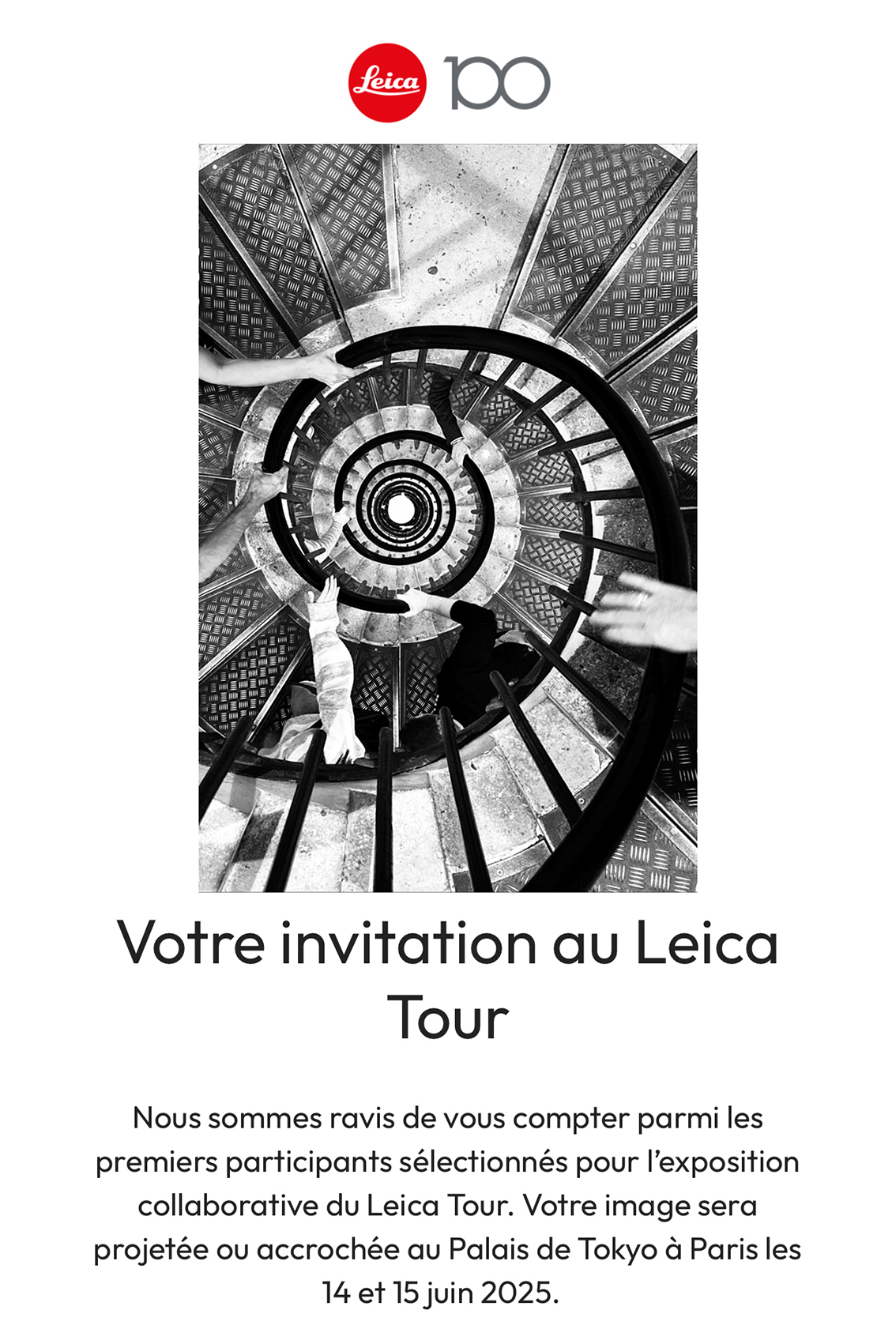
Leica Tour (June 2025)
June 2025 Paris, September 2025 Bordeaux, November 2025 Lyon, April 2026. Marseille
This photograph was selected for the participation in Leica Tour 2025 around the theme « Perspectives singulières ». Photo will be exposed in Palais de Tokyo in Paris and then in Bordeaux, Lyon, Marseille et Lille.
Paris, Palais de Tokyo, 14 et 15 June 2025,
Bordeaux, locaux de Panajou, 20 Sept 2025
Lyon, Galerie Masurel, 22 Nov 2025
Marseille, 41 Rue Montgrand, 4 Apr 2026
Lille 2026 -
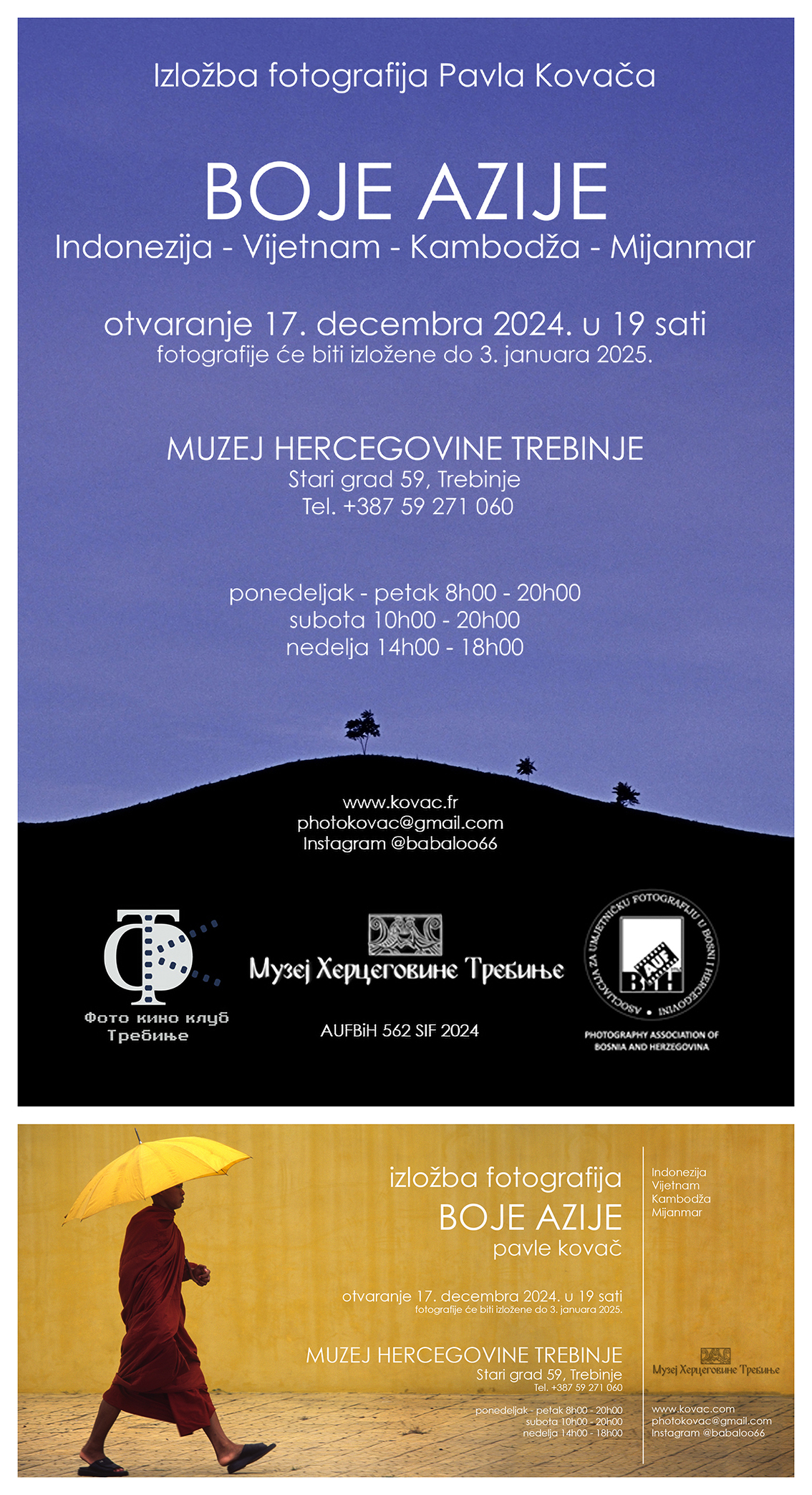
Solo exhibition Colors of Asia (Dec 2024)
17th of Dec 2024 in Museum of Herzegovina, Trebinje
East of the End
When Pavle Kovač’s Asian photo cycle appeared before my eyes, I felt a profound unease. I did not merely look at the photographs — I stared into them, utterly captivated. As someone whose eye has long grown accustomed to dramatic and striking visual sen-sations, I knew that this captivation had not been sparked by Kovač’s virtuoso technique; it was rising from somewhere deep within my being. And then I remembered a long-ago read cosmogonic poem by Panuta Bantang and its lines:
only colors and dreams are distributed justly and undeservedly.
That recollection explained my unease. By offering my eye the wonder of colors — which, with each new glance, bring beings and spaces within the photographs to life in a different way — Kovač subtly and slyly led me into the realm of dreams, for which I am endlessly grateful.
Someone hasty might claim that there is little or nothing dreamlike in these photo-graphs, since Kovač’s lens mercilessly seizes reality each time, refusing to let it hide be-hind haze or optical distortions. That realism, however, is only an appearance, a superfi-cial attribution. The dreamlike quality of this cycle is born of angles and the relationships between them — the angle from which the artist observes the world and its beings, the angle from which those beings position themselves in relation to the world, and the angle from which the viewer approaches.
The labyrinth built by these angles is inhabited by intuitions and premonitions; through its corridors pass visions that will seem confusingly close and familiar to the viewer, pro-vocatively urging reflection. Although I have never visited Asia, especially not the distant East, these photographs awakened in me a kind of déjà vu — unsettling at first, later in-creasingly pleasant. And then it dawned on me — intuitions are shared by humankind, or at least connected by a common source. And precisely because our intuitions are sha-red, our experiences are similar, mutually intelligible, and complementary.
The question of experience is the key to understanding this Kovač cycle, in which, be-neath the already mentioned virtuosity, the artist opens — more within the realm of intui-tion than philosophical contemplation — the question of the relationship between the experience of the artist, the experience of the being who is not merely the object of ar-tistic creation but also a participant in the process, and the experience of the viewer who, though arriving afterward, also participates in the creative act. The collision of these three experiences illuminates the paths toward understanding the ontology of the world and the way the experience of the world participates in grasping its ontology.
Unlike the Occident, where life becomes an urban and thus state phenomenon — even when rural — and where life retreats before thought, not the thought that trembles with primordial philosophical wonder, but the utilitarian, therefore hierarchical and dehuma-nized one, in the Orient life still knows that it must first and foremost be lived. And to be lived, it requires both strength and gentleness, both thought and dream. Naturally, it also requires color, for without the colors of the world, there is no life within it.
Kovač clearly understands the distant Orient, and the proof of that understanding lies in his approach — devoid of exoticization and of any a priori imposed aestheticization as an ideological procedure. Instead, he approaches it as we ought to approach ourselves — as fact, but also as intuition. He approaches it as an equal, knowing that any other approach would be mistaken and lead astray. Thus Kovač creates not only a precious and sump-tuous visual document and a wondrous travelogue, but also a genuine work of art from which, like a tiger from the jungle, new dramatic and essential philosophical and poetic questions constantly leap at the viewer — along with those long-posed questions such as Gauguin’s D’où venons-nous? Qui sommes-nous? Où allons-nous?
The profoundly honest and reciprocal relationship that Kovač builds with the Orient through his lens is graciously rewarded by a work that does not impose upon the viewer an obligation of interpretation within preordained expectations. Faced with a photo-graph of a European fisherman, a European viewer will almost inevitably drift into exis-tentialist or even vulgar political reflections, believing this fulfills a duty of intellectual engagement.
Kovač’s photograph of an Asian fisherman, through technical mastery and poetic fra-ming, offers colors from which one can sense the smell of the caught fish, the rocking of the boat on the water, even the fisherman’s breath. That breath does not have the po-wer to provide answers about the fisherman’s life, but it is powerful enough to remind us that wherever there is breath, there must also be a dream. If we understand that this dream might also be ours — if the breath and gaze of the Asian fisherman or child re-mind us of the existence of our own breath and our own gaze as the only authentic proofs of our living — we will know why it was worth embarking on Kovač’s Asian adven-ture.
I conclude this text with the confession that I am still taken aback and bewildered by the intensity of sensations and the countless associations this photographic cycle has awake-ned in me. That confession is necessary so that I may also admit that I am no longer cer-tain whether I truly once read the aforementioned poem by Panuta Bantang — or whe-ther it too was merely one of the visions that appeared to me within Pavle Kovač’s won-drous Asian labyrinth.Elis Bektaš
-

Award (Avr / May 2024)
Rush hour
The best street life photo at 7th International Digital Exhibition Vision 2024 in Finland -

Award (Dec 2023)
56th Days of BiH photography, Banja Luka, Dec 2023
Photographic Association of Bosnia and Herzegovina (AUFBIH) in 56th edition of the exhibition Fotography in Bosnia and Herzegovina awarded the photograph "At school 1" ("U medresi") as the Best photo on Foto BiH exhibitions in 2023
-

Solo exhibition Short stories from Indonesia (Dec 2023)
15th of Dec 2023 in Cultural Center, Trebinje
PHOTOGRAPHY AS AN EXOTIC TRAVELOGUE
If Pavle Kovač had lived in the time of Evliya Çelebi, when the camera had not yet even been in its infancy, he would certainly have been a travel writer and, like him, would have written his impressions from distant journeys on paper. Since that was not the case, the author of the exhibition presents to us his impressions from the exotic East—where he found himself as a mechanical engineer—through photographs made in his favorite black-and-white technique.
Observing just one of them is like a short excursion, while viewing the entire exhibition borders on an exciting journey through distant and, to us, fairy-tale-like Eastern landscapes, along with an encounter with people of different life habits, ways of acting, culture, and religion. Such a journey would be worth taking even with an amateur photographer, but what Pavle’s camera lens offers us is much more than even a professional photographic display. It is the ability to immortalize those most essential moments that give a stamp to space and time, thus bringing the atmosphere’s specificity close to an almost real experience. And that is something only people with an innate instinct and an artistic view of photography and its creation can provide.
What kind of coincidence, for example, was needed for the photographer to find himself in an Islamic place of worship among several hundred identically dressed female believers, caught in the same prayer posture—so that, in the blink of an eye, one of them would turn and enable a unique photograph in which we can enjoy endlessly? A coincidence of multiple physical and technical factors—inevitably—but the author’s instinct and magic—certainly.
Pavle’s “images” have a kind of magnetic attraction: they do not allow themselves to be abandoned, and they demand that we return to them and look again, just as landscapes from a real journey draw us back to themselves. After the initial recognition of the main subject, these photographs inevitably deepen our interest in the broader context, so that we will soon wish to have a geographic atlas, a history book, or a biology book at our side.
When we leave the exhibition—which would also represent returning home from a journey—we remain moved, in another world, with a feeling similar to the one that overwhelms us after a good theater performance.Dr. sc. med. Dragan Kovač
-

Award (2022)
French PHOTO magazine #554, laureate for urban landscape
-

Sales exhibition (Oct 2016)
27th Oct to 1st Nov 2016, Paris
-

Sales exhibition (May 2016)
30th to 31st May 2016, Paris
-

Award (2014)
French PHOTO magazine and association Enfants du Mékong, "Enfance et Joie", 2nd place awarded by Sabine Weiss
-

Award (Dec 2007 / Jan 2008)
French PHOTO magazine #446, 1st price in category " Le Voyage", selection by Olympus France for travel photography
-

Award (Dec 2007)
GOLD AWARD DIGITAL PRINTING ELECTROGRAPHIC/ LASER, 5TH ASIAN PRINT AWARDS 2007
BEST USE OF THE DIGITAL PRINTING PROCESS FUJI XEROX PLATINUM SPONSOR AWARD, 5TH ASIAN PRINT AWARDS 2007
-

Book publication (June 2007)
Colors of Asia book was published by HEXART in Jakarta.
The collection of photographs titled Colours of Asia seeks to convey the atmosphere and light of Southeast Asia through a few subjects that are very characteristic of this region. Between landscapes and scenes of everyday life, through typical details and portraits of ordinary people, the only common denominator of all these photographs remains colour—saturated and explosive, vivid and strange, often on the verge of Asian kitsch.
This book, the result of various trips to Indonesia, Vietnam, Cambodia and Myanmar between 2002 and 2006, is a selection of around one hundred photographs, about fifty of which were exhibited in Sarajevo in November 2006. To better present the similarities among these Asian countries, the photographs are placed side by side by subject, colour, composition, or simply by atmosphere. The double-page photographs provide a transition between different subjects and are sometimes themselves presented as a pair with the following double page. As you leaf through this book, you are invited to find these links and connect the themes through your own interpretations.
I hope that the different chapters of this book will be for you a ticket for an imaginary journey and an invitation to discover the magic of Southeast Asia.
Have a good trip…Pavle Kovac
Jakarta, 2007. -

Solo exhibition Colors of Asia (May 2007)
21st of May, Duta Fine Arts Foundation, Jakarta
COLOURS OF ASIA
The photographer’s eye is, above all, a gaze that pierces the light, so as to leave it vibrating in this mad struggle against evanescence. Colours must burst out of the frame to shimmer still when we close our eyes.
Thus, the light does not go out; it remains alive in this offering to life, more powerful than the mere tender memory of a trip during which we sometimes forget to linger because we want to see everything—too much, too fast.
Of the four countries we are given to discover in these images, it is less the differences than the similarities that surface—dark or shimmering colours of Southeast Asia. The same bright eyes of children, the same hands worn by the work of transplanting rice; differences show themselves to us just as much as resemblances do.
If we needed a guiding thread, it would be that of happiness: happiness despite fear, suffering, yesterday’s or today’s misery; children’s happiness at a soap bubble; the happiness of women whose chattering we can almost guess even if their shoulders are weighed down by baskets that leave their backs trembling. The happiness of seeing the sun rise and fade in the race of time, offering us dawns and sunsets like gifts.
Pavle Kovac’s work invites us to travel, but even more to initiation.
It is for the eye to learn, through this play of colours, that whether in Indonesia, Cambodia, Myanmar or Vietnam, humanity is everywhere the same; even if colours transform and change it, it is one and the same book that is forever open before us.
Houses crushed by the damp leprosy of endless seasons, which give seeds time to crack these façades a little more; the eyes of the dead on the cliffs of Toraja country who, guardians of lineages, leave us with a kind of regret for what lies beyond. Stones and walls are inhabited by laughing or malevolent spirits, washed by tears and winds; doorsteps are left open so that the child at play, the whistling bird, may find refuge there from fatigue.
Water—murky or sparkling with wave-foam—snapping in nets or against the hulls of these boats, heavy or fragile: everywhere, people struggle to bring in their catch. Paradise beaches yet roaring typhoons; nature like a casket shaped by feet and hands—this too is Asia, creator of landscapes: valleys of tea plants and the roaring waterfalls of rice terraces, from Bali to Annam; green lights up these lands as much as it nourishes them.
It is the sound of water we sense; from the gentle coolness of eggplant, everything is also flavours and scents to be guessed at behind the shade of market stalls, in temple corners, in the dust of stone façades—Kala’s head or the Buddha’s smile—silence screams even louder in the heat.
But let us drift; let us follow the rivers and the roads, the stray dog, the singing bird, the mischievous child, to enter the countries that the photographer’s lens has crossed for us.
Have a good trip!Sandrine Pic
-

Solo exhibition Colors of Asia (Nov 2006)
6th to 12th Nov 2006 in Museum of Literature and Theater Arts, Sarajevo
COLOURS ARE WITHIN US—AND WHEREVER PAVLE KOVAČ IS
Someone very important for articulating the intellectual processes and spiritual trends of the 20th century—Walter Benjamin, in this case—once accurately observed that the illiterate person of the future will not be the one who does not know how to read and write, but the one who does not understand photography. The writer of this text does not intend to misrepresent himself in that sense, but by the nature of my profession I have spent more than half my life surrounded by a handful of great masters of photography, so it is probably for that reason that this duty and honor has fallen to me. On the other hand, for more than half my life—intermittently—I have also been “surrounded” by the skills and presence of the author of these photographs, so it was quite natural that the choice fell on the person who would write something about the series, that is, the exhibition of Pavle Kovač’s photographs.
Not without fear did I approach these photographs that depict the world of the Far East, and not without joy do I note that the post-war Bosnian-Herzegovinian scene—proven to be one of the best in the wider region, and objectively blossoming during the war and the early post-war years—has gained another name worth remembering. Pavle Kovač, having long waited for the conditions, time, and opportunity to realize what he had envisioned, carried within himself an unusual concept for our milieu—a concept which, working with him, I sensed among our photographers perhaps only in Dejan Vekić, and—by my personal judgment—the greatest among the great: Milomir Kovačević “Strašni”.
It is, conditionally speaking, a principle that documents through composition, light, or colors—one that therefore satisfies the basic classical criteria for evaluating photographs—but which, as an independent work, also says something more: above all, about the author’s experience of what he is photographing. What seems most important to me in these photographs is that they offer a comparison with the images you carry within yourself. Analogous to Beuys’s principle that “every person is an artist,” in today’s time one could propose the maxim that “every person is a photographer.” On a physical level, that is more than obvious. At various destinations from Java to Jamaica and from Alaska to Tokyo, rivers of people with cameras try to record moments of their own lives or of collective consciousness—depending on their wishes, tasks, ambitions, and the scope of what they can capture with eye and lens—and it is no wonder that we, as a civilization, are at this moment so dependent on photography. That makes these photographs all the more valuable: made in a technique that is increasingly receding, they are, in a way, testimony to the past, but also a window showing that even today it is still possible to conceive and realize a demanding concept of bringing closer a world about which little or nothing is known here. Thus the author’s inspiration becomes inspiration for the viewer of his work, and in that we see the interaction we seek in, presumably, every work of art. An absolute flow of an idea, one might say.
Whether he depicts portraits of Asian women whose faces speak of the never-enough-spoken or written secrets of the East; or shows a magical morning over tea plantations; a beach in Vietnam known to us as a wartime toponym; fascinating patterns on handicrafts; or a market on junks—images of Cambodia, faces of Indonesia—Kovač does it with the devotion of a collector who, to quote Benjamin again, “renews the old world, which is the collector’s deepest desire when he feels the urge to acquire new things.” Therefore, there is no need to strain oneself trying at all costs to find out why Kovač chose precisely these images, or how long they took to come into being.
There is no doubt that the thought behind them was carefully nurtured in the darkrooms of the Sarajevo photo club, in Steleks, in Paris, on drilling rigs in the Indian Ocean—everywhere Pavle was carried by his so unusual, yet so law-governed biography, considering those of us born at the end of the 1960s in a city called Sarajevo which, in our “vakta” and “zemana,” changed two states and one war, and felt all the unnaturalness of the wrong coding of religious and cultural differences that we all carry within ourselves. The experience of someone with great technical knowledge merged with the experience of an observer, because no technique helps if the eye and finger do not have a symbiosis that ultimately results in a projection—in other words, if there is no talent.
So it did not surprise me at all when Kovač pulled out his album, or at least part of it: accustomed to such surprises again by the nature of my work, and also in this particular case, I knew that somewhere alongside his projects, a drawing of an electric guitar which—don’t doubt it—he will one day simply bring and ask what you think of his new hobby, or tightening the strings on a violin bow—he is doing something else as well. That “something” is these excellent photographs, and there is nothing to do but wish that he surprises us again. With photographs, or humanly, the way only he knows how. Either way, the destiny of such people—whom we often call Renaissance-like because of the multitude of talents they possess—is never fully revealed, in all its splendor and fullness, and in everything it carries with it, including its shadows, in the moment of its duration. It is something that represents lasting value, which I hope will be the case with these photographs as well. I see no objective reason why Pavle Kovač should not continue to surprise us, because—as a hit from our youth says—“The colours are within us.” There are still people who can see them and record them so masterfully. The colours, therefore, are always somewhere out there where Pavle Kovač and his lens are.Ahmed Burić
Sarajevo, 5 October 2006.